
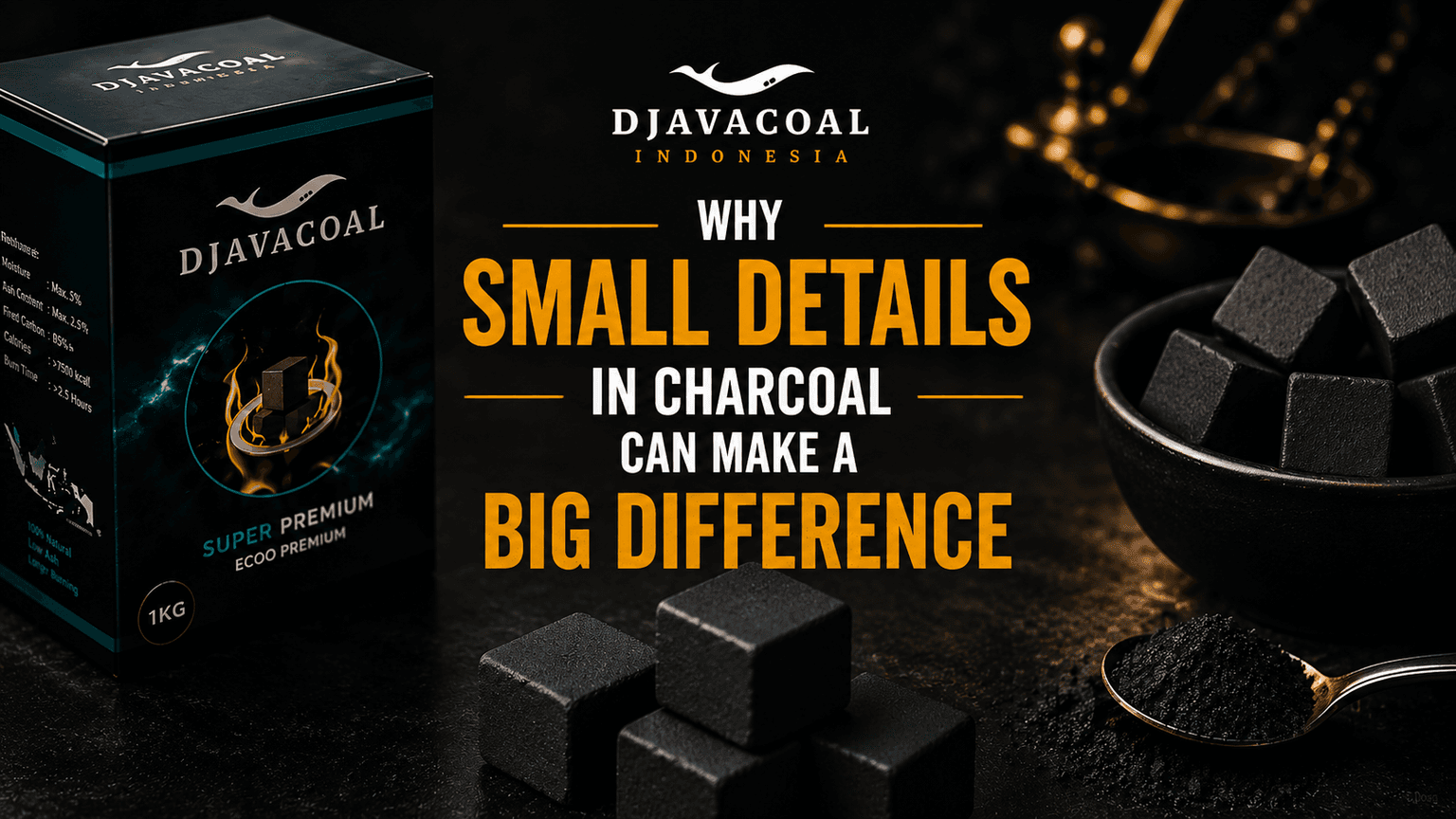
Quality control in charcoal production is about defining checkpoints and checking the product against agreed specifications at each stage. In this article, we explain how production is coordinated at Charcoalnesia, from raw material to shipment preparation.
QC as Defined Checkpoints
Quality is evaluated against agreed product parameters and defined checkpoints during production, drying, final inspection, packing, and shipment preparation.
Raw Material Selection and Screening
Selected coconut-shell charcoal is screened to reduce impurities and support the agreed ash specification.
Drying Temperature Control
Drying conditions are monitored to achieve the agreed moisture specification.
Dimensional Inspection
Briquette dimensions and cutting consistency are checked against the approved product and packaging specification.
Logistics Check
Final cargo and documentation checks are completed to support compliance with applicable maritime dangerous-goods requirements.
Testing and Documentation
Applicable batch testing and third-party analysis can be arranged according to buyer, contract, or shipment requirements. Commercial specifications are separated from batch COA results - the specification defines the agreed range, while the COA records the measured values of the tested batch.
Why Defined Checkpoints Matter
For buyers, defined checkpoints mean the product is evaluated against the same parameters on every order. When evaluating a supplier, ask:
- Which parameters are checked, and at which production stages?
- How are the agreed ranges defined for each quality grade?
- Which documents apply to the destination and shipment?
Conclusion
Quality control is a framework of agreed specifications and defined checkpoints. Buyers should confirm the grade, dimensions, packaging, and applicable documentation before ordering - and evaluate a sample before committing volume.